
From Local Hero to National Infrastructure: A Community Bank’s Guide to BaaS
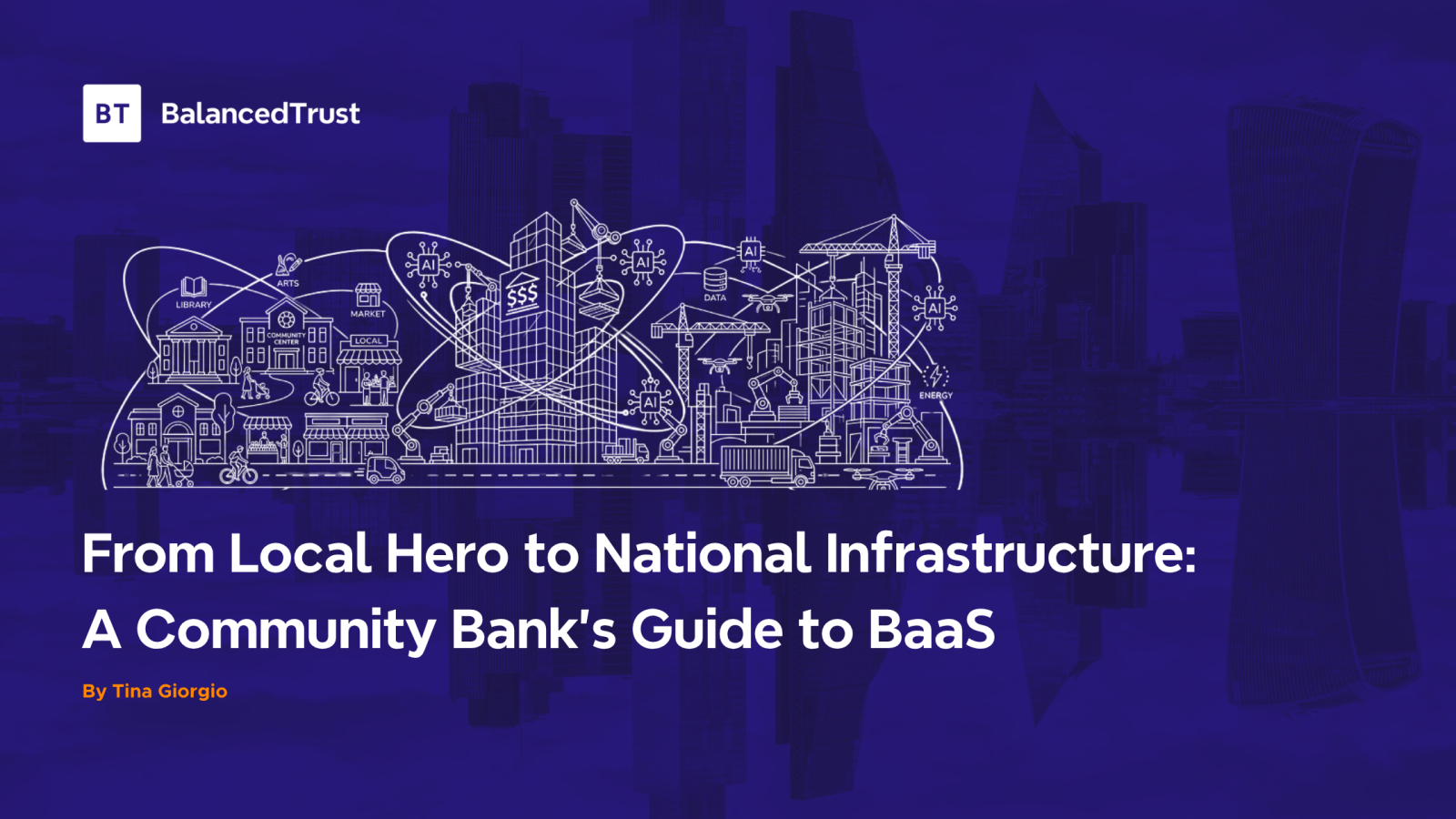
For many community banks, the shift toward Banking-as-a-Service (BaaS) isn't just a tech trend - it’s a survival strategy to diversify deposits and reach more customers. However, becoming a partner bank is a marathon of compliance, not a sprint of software.
Here is a roadmap for community banks preparing to enter the BaaS space.
1. Secure Board Buy-In and Strategic Alignment
Before looking at APIs, you need to look at your mission. BaaS changes a bank's risk profile significantly.
- The Business Case: Define why you are doing this. Is it for low-cost deposits, fee income, or reaching a specific niche (e.g., gig workers, small businesses)?
- Risk Appetite: Your board must understand that in a BaaS model, you are responsible for the fintech’s actions. You can outsource the function, but you can never outsource the responsibility.
2. Audit Your "Regulatory Readiness"
Regulators (OCC, FDIC, and Fed) have intensified scrutiny on bank-fintech partnerships. You must demonstrate "supervision and control."
- Compliance Infrastructure: Enhance your BSA/AML and KYC/KYB programs to handle higher volumes and governance procedures for delegated functions.
- Third-Party Risk Management (TPRM): Build a robust framework to vet and monitor partners continuously, not just during onboarding.
- Consumer Protection: Ensure you have oversight of the fintech’s marketing materials and accuracy and privacy policies.
3. Modernize the Tech Stack
Legacy core systems are often the biggest bottleneck. To be a viable partner, your "plumbing" needs to be accessible.
- API-First Layer: If your core isn't modern, you may need a middleware layer that provides a clean API for fintechs to plug into.
- Modular Architecture: Shift toward microservices. This allows you to scale specific functions, like payment processing or ledgering, without taxing the entire system.
- Real-Time Everything: Fintechs operate in milliseconds. Your ledger and reporting tools must support real-time data flow.
4. Build a Dedicated "BaaS Squad"
BaaS shouldn’t be a side project for your existing team. It requires a dedicated "squad" with a different mindset.
- The Liaison: A relationship manager who speaks both "bank" and "fintech."
- The Tech Team: Staff who understand API documentation and cloud security.
- The Auditors: Compliance officers who know how to audit automated systems and digital-first workflows.
5. Select Your First "Pilot" Partner Wisely
Your first partner will define your reputation in the space. Don't go for the most complex use case first.
- Alignment: Choose a fintech whose target audience matches your expertise (e.g., if you’re a commercial-heavy bank, partner with a B2B fintech).
- The "Due Diligence" Test: Use the first partnership to pressure-test your onboarding process. If it takes six months to vet a simple partner, you aren't ready for the "fast-moving" fintech world yet.
Key Takeaway for the C-Suite
Success in BaaS is 20% technology and 80% risk management. Regulators aren't looking at your APIs; they’re looking at your oversight.
Tina Giorgio is Chief Operations Officer at BalancedTrust.
The BaaS Preparedness Checklist
1. Governance & Strategy
- Board-Approved Risk Appetite: Does the board have a formal statement on fintech concentration limits and acceptable risk levels?
- Strategic Alignment: Is the BaaS program integrated into the 3-year strategic plan, or is it a "side project"?
- Exit Strategy: Do you have a "Step-Out" plan for each partner in case of regulatory or financial distress?
2. Regulatory & Compliance (The "Big Three")
- BSA/AML/KYC Systems: Can your current monitoring tools scale to handle 10x or 100x the transaction volume?
- Third-Party Risk Management (TPRM): Is there a formal process for initial due diligence and continuous monitoring of fintech partners?
- Consumer Protection Oversight: Do you have a process to review and approve every screen of a partner's UI and all marketing copy (social media, ads, etc.)?
3. Technology & Infrastructure
- API Accessibility: Do you have an API layer that allows for secure, sandbox testing for developers?
- Real-Time Ledgering: Can your core system handle real-time balance updates, or are you reliant on overnight batch processing?
- Data Residency & Security: Are you able to segment partner data clearly to prevent cross-contamination and ensure SOC2 compliance?
4. Operational Capacity
- Dedicated Staffing: Have you hired or designated a head of BaaS and a fintech Compliance Officer?
- Incident Response: Is there a defined communication protocol between the bank’s IT team and the fintech’s DevOps team for outages?
- Customer Dispute Workflow: Who handles Reg E or Reg Z disputes—the bank or the fintech? Is the bank's oversight of this process documented?
5. Financial & Capital Planning
- Capital Adequacy: Have you modeled how rapid deposit growth from a fintech partner will impact your leverage ratios?
- Unit Economics: Have you calculated the "all-in" cost of compliance and tech maintenance vs. the expected fee income?
- Liquidity Management: Do you have a plan for "hot money" (volatile deposits) if a fintech partner suddenly loses its user base?
Categories
CBA Signature Events
Upcoming Webinars

ICBA Education Programs