Legislative Days 39-40
That's a Wrap on the 2026 Legislative Session
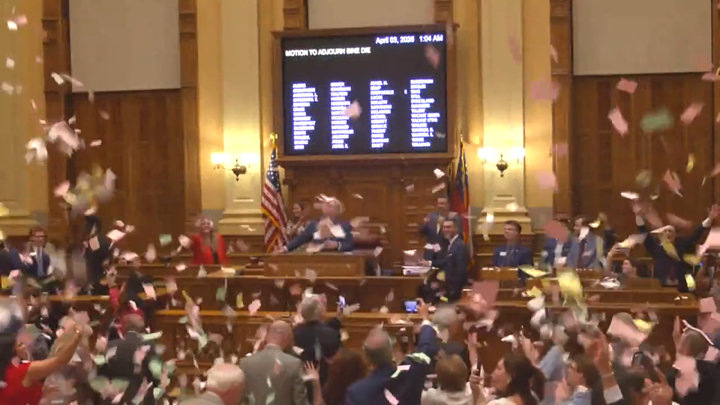
The House and Senate adjourned just before 1am Friday, ending the 2026 session with plenty of fast-moving bills, last-minute deals, and end-of-session maneuvering. Shortly after the dinner break, Governor Brian Kemp delivered his final remarks to the General Assembly, praising their investment in education, workforce development, school safety, and law enforcement. He now has until early May to sign or veto legislation.
Attention now shifts to the campaign trail. Just three weeks remain until early voting begins ahead of the May 19 Primary Election. This will be an especially busy time for the nearly 50 incumbent lawmakers with a Primary challenger and those seeking higher office. With open seats at nearly every level of government, the 2026 election cycle is poised to produce significant turnover in Georgia politics.
Due to the frenetic nature of the final days of the General Assembly, it is common for dead legislation to find new life within other active bills. This report represents a best effort to accurately report on relevant legislation.
Active Measures: Banking

Department of Banking Housekeeping (HB 945)
Rep. Bruce Williamson, R-Monroe
Eligible for enactment by the Governor
This year’s legislative housekeeping package is one of the most consequential in recent memory. The bill establishes a process to allow financial institutions to place temporary holds on transactions when they reasonably suspect financial exploitation of elderly (65+) or disabled adults. The initial hold may last up to fifteen business days, with one additional fifteen-day extension permitted. The financial institution must provide notice of the hold to both the account holder and any trusted contacts. Institutions acting in good faith receive civil, criminal, and administrative immunity.
The legislation also regulates cryptocurrency ATMs, with mandatory consumer disclosures, fee caps, and daily transaction limits. It expands the Department’s authority over litigation financiers to increase transparency and accountability; this was part of last year’s legal reform package.
CBA will continue to work with the Department to develop rules for implementing these changes and will collaborate on training for banks regarding the use of transaction holds.
Voluntary Portable Benefit Plan Act (HB 987)
Rep. Todd Jones, R-Cumming
Eligible for enactment by the Governor
HB 987 creates a legal framework for voluntary portable benefit plans for independent contractors. The bill allows independent contractors to accumulate and manage benefits (like insurance and retirement savings) without changing their legal classification as independent contractors. It specifically authorizes banks to serve as portable benefit account providers, creating opportunities for new deposit products.
Local Government Investment Pool (SB 441)
Sen. Marty Harbin, R-Tyrone
Eligible for enactment by the Governor
SB 441 requires certain pooled investments to be approved by the State Depository Board.
Medical Cannabis (SB 220)
Sen. Matt Brass, R—Newnan
Eligible for enactment by the Governor
SB 220 renames low THC oil as medical cannabis and adds language about parents and caregivers.
Boat Titling (HB 115)
Rep. Jesse Petrea, R-Savannah
Eligible for enactment by the Governor
HB 115 pertains to the registration, operation, and sale of watercraft. It authorizes the Department of Natural Resources to remove, store, and dispose of abandoned vessels.
Rounding Cash Transactions (HB 1112)
Rep. Carter Barrett, R-Cumming
Agreed to by the House on April 2 and eligible for enactment by the Governor
HB 1112 allows retailers to round cash transactions to the nearest five cents as pennies are phased out of circulation. The version adopted by the House required retailers to “always round down,” creating concerns about the long-term impact. The Senate Finance Committee returned the bill to its prior form, allowing transactions to be rounded to the nearest five cents.
Stablecoin (HB 1272)
Rep. Todd Jones, R-Cumming
Adopted by the Senate on April 2 and eligible for enactment by the Governor
This bill establishes a state-level regulatory framework for payment stablecoin issuers, aligning state law with the federal GENIUS Act. The bill requires licensure and regulation by the Department of Banking and Finance. Representatives from The Stablecoin Institute and The Fintech Accord joined the author of the bill in his presentation. Committee members asked detailed questions, reflecting a growing understanding of the bill’s scope and implications.
Financial Literacy (HB 1114)
Rep. Bill Yearta, R-Sylvester
Lost. Adopted by the Senate on April 2, but needed agreement by the House
HB 1114 allows students in ninth and tenth grade to complete the high school graduation financial literacy course requirement. The committee added language from HB 1269 to establish digital literacy standards for students in grades K-12.
Active Measures: Property

Debtor's Aggregate Interest (HB 1024)
Rep. Soo Hong, R-Lawrenceville
Eligible for enactment by the Governor
HB 1024 increases the exemption for a debtor's aggregate interest in real property or personal property that the debtor or a dependent of the debtor uses as a residence, in a cooperative that owns property that the debtor or a dependent of the debtor uses as a residence, or in a burial plot. The exemption increases from $21,500 to $50,000 or from $43,000 to $100,000 if it is the primary residence of both spouses. The exemption adjusts in future years by an inflation rate of the prior year.
Towed Motor Vehicle Database (SB 569)
Sen. Brian Strickland, R-McDonough
Agreed to by the Senate on March 31 and eligible for enactment by the Governor
SB 569 allows certain towing companies to use amber lights when responding to roadside emergencies. The House Motor Vehicles Committee added language from HB 184 to create a statewide “towed motor vehicle database” under the Department of Revenue. The database will allow owners to search for a towed vehicle using a VIN or license plate. The tow company must send notice by certified mail or hand delivery with detailed information about the vehicle location, towing/storage fees, and the risk of a lien.
Property Owners’ Associations (SB 406)
Rep. Matt Brass, R—Newnan
Adopted by the House on March 31, agreed to by the Senate on March 31, and eligible for enactment by the Governor
SB 406 requires the registration of property owners’ associations. It raises the minimum delinquency threshold for foreclosure from $2,000 to $4,000. The committee amended the bill to include the language from HB 1221 to require the initial written notice be issued by certified mail before attorney’s fees can be awarded. It also added in right-to-cure provision.
Bona Fide Conservation Use Property (SB 306)
Sen. Randy Robertson, R—Cataula
Agreed to by the Senate on April 2 and eligible for enactment by the Governor
SB 306 requires notices of impending expiration of preferential assessment for bona fide conservation use property and bona fide residential transitional property be sent via certified mail. It now contains language from HB 547, which also relates to bona fide conservation use property. The House Rules Committee amended the bill to clarify the Low-Income Housing Tax Credits as awarded instead of allowable.
Claim for Compensation for Loss of Property Value (HB 295)
Rep. Houston Gaines, R—Athens
Adopted by the Senate on April 2, agreed to by the House, and eligible for enactment by the Governor
HB 295 provides procedures for real property owners to make claims for compensation from local governments for loss of property value or expenses incurred due to the local government’s failure to comply with or nonenforcement of certain laws, ordinances, and resolutions or due to the local government maintaining a public nuisance (immigration sanctuary policies, public camping, loitering, panhandling, etc.). The Senate amended the bill to include language from SB 21 relating to sanctuary cities plus included the so-called “Epstein Amendment” relating to sexual harassment claims against members of the General Assembly.
Transfer on Death Deeds (HB 413)
Rep. David Jenkins, R—Grantville
Adopted by the Senate on March 31, agreed to by the House on April 2, and eligible for enactment by the Governor
As introduced, HB 413 originally related to the mobile operation of sawmills. The bill now serves as a vehicle for provisions from HB 899 relating to transfer on death deeds.
Squatters Bill (HB 61)
Rep. Devan Seabaugh, R—Marietta
Lost. House tabled the bill and did not take action
Originally addressing license plates for hearses, HB 61 now contains provisions from HB 183 regarding hotel/motel squatters and SB 184 regarding forgery cases related to unlawful squatting.
Active Measures: Taxation
Property Tax Reform (SB 33)
Sen. Kay Kirkpatrick, R—Marietta
Adopted by the House on March 31, agreed to by the Senate on April 2, and eligible for enactment by the Governor
A major priority of Speaker Jon Burns, the House and Senate volleyed different versions of property tax reform across the Capitol all session. When the compromise package was unexpectedly voted down in the Senate just after 11pm on sine die, legislators raced to keep the issue alive by repurposing SB 33, which now:
- Authorizes a new 1% local sales tax (subject to voter approval) to fund homestead property tax relief
- Mandates a previously-optional statewide base year homestead exemption
- Excludes certain homestead exemption values from school funding formulas
- Standardizes when local governments can hold referendums to increase taxes or revenues
Property Tax Reform (HB 1116)
Rep. Shaw Blackmon, R-Bonaire
Lost. Adopted by the Senate on March 31, amended by the house on April 2, and voted down in the Senate by a vote of 24-28.
The Georgia HOME Act shifts a portion of local government funding away from property taxes and toward local sales taxes. Beginning in 2028, local governments may not increase property tax revenue beyond 3% or the rate of inflation, whichever is greater. The cap applies to total property tax revenue, including both homesteaded and non-homesteaded property. This revenue cap can be waived by a local referendum or local act approved by the General Assembly. Components of this bill were passed in SB 33.
Income Tax Reform (HB 463)
Rep. Shaw Blackmon, R—Bonaire
Eligible for enactment by Governor
HB 463 is a broad-based income tax reform package containing the following provisions:
- Reduces the income tax from 5.19% to 4.99% immediately with further reductions planned
- Increases deductions and exemptions
- Exempts up to $1,750 in overtime income and cash tips from income tax
- Eliminates several tax credits and exemptions
Annual IRC Update (HB 1199)
Rep. John Carson, R—Marietta
Enacted by the Governor on March 20
HB 1199 conforms Georgia tax law to selected federal provisions. The House amended the bill to include new income tax exemptions, a 60-day gas tax holiday, and a cap on housing tax credits.
Local Homeowner’s Incentive Adjustment Grant Program (HB 439)
Rep. Bill Yearta, R—Sylvester
Eligible for enactment by the Governor
HB 439 relates to local governments and authorizes the establishment of local home local homeowners’ incentive adjustment grant funds.
Manufactured Homes (HB 165)
Rep. Lehman Franklin, R—Brooklet
Agreed to by the House on March 31 and eligible for enactment by the Governor
Last year, the original provisions of HB 165 were enacted under a different bill number. The Senate Finance Committee used it to advance provisions from HB 134. It subjects 50% of the manufacturer's invoice amount to sales tax on the first retail sale or retail purchase of a manufactured home. All other sales are tax-exempt. The bill sunsets on June 30, 2030.
Income Tax Reform (HB 134)
Rep. Beth Camp, R—Concord
Agreed to by the House as a substitute on March 31, agreed to by the Senate on March 31, and eligible for enactment by the Governor
HB 134 as originally drafted was gutted. The bill has been used as a vehicle for several bills this session. As passed, the bill has language from HB 1085 relating to forestry manufacturing facilities. The bill provides various tax credits for forestry manufacturing facilities and provides for aggregate maximum amounts of tax credits.
Affidavits of CPA in Lieu of Tax Returns (HB 141)
Rep. Martin Momtahan, R—Dallas
Adopted by the Senate on April 2 and eligible for enactment by the Governor
HB 141 allows businesses and practitioners to provide affidavits of certified public accountants in lieu of tax returns. Passage in the Senate will send the bill to the Governor’s desk.
Active Measures: Judicial

Magistrate Court Fees and Costs (HB 999)
Rep. Rob Leverett, R-Elberton
Eligible for enactment by the Governor
HB 999 increases the magistrate court jurisdictional limit from $15,000 to $25,000 to align with the state’s minimum limits. Additional language in the bill relates to the election of probate and magistrate judges.
First Offender Offenses (HB 162)
Rep. Leesa Hagan, R—Vidalia
Eligible for enactment by the Governor
HB 162 provides for the restriction and seal of First Offender Act sentences until such status is revoked. It also provides for the restriction and seal of first offender sentences at the time of sentencing.
Business Litigation Reform (HB 1185)
Rep. Chuck Efstration, R-Mulberry
Agreed to by the Senate on March 31 and eligible for enactment by the Governor
This business-friendly litigation reform is designed to make Georgia more attractive for incorporation and headquarters operations.
Remote Online Notary (SB 8)
Sen. Kay Kirkpatrick, R—Marietta
Lost. Senate voted down the amendment by a vote of 26-26.
SB 8 is now serving as a vehicle to advance language related to remote online notary (HB 289) and the unauthorized practice of law (HB 1433). The RON language is identical to 2021’s HB 334 and received strong bipartisan support in the House and Senate, but ultimately failed to cross the finish line. CBA worked closely with Chairman Joseph Gullett on this effort in 2021 and appreciates that the changes the Association advocated for are preserved in the current bill. On the Senate floor, there was a proposed amendment to prohibit remote online notary from being used on deeds transferring any interest in real property, which essentially gutted the bill from a financial institutions perspective.
Active Measures: Technology
Senate Study Committee on the Impact of Artificial Intelligence (SR 789)
Sen. Donzella James, D—Atlanta
Authorized by the Senate on March 31
SR 789 creates a Senate Study Committee on the Impact of Artificial Intelligence
Virtual Peeping & AI-Generated Images (SB 398)
Sen. Bo Hatchett, R—Clarkesville
Lost. Adopted by the House on March 31, disagreed to by the Senate on March 31, and no further action taken by the House.
SB 398 prohibits the use of a generative artificial intelligence system to generate images of individuals knowing such generation was without authorization.
Active Measures: General Business
Tax Credit for Individuals (HB 1000)
Rep. Matthew Gambill, R-Cartersville
Enacted by the Governor on March 20
HB 1000 provides a one-time tax credit for individual taxpayers who filed income tax returns for the 2024 and 2025 taxable years. This measure is a key component of Governor Kemp’s final legislative package.
Georgia Uniform Securities Act (SB 284)
Sen. Larry Walker, R—Perry
Eligible for enactment by the Governor
SB 284 authorizes the issuance of orders by the Commissioner of Securities directing persons who have violated certain securities provisions to return to investors, customers, or clients sums paid in connection with securities purchases.
Electronic Filing of Pleadings in Probate Court (HB 530)
Rep. Rob Leverett, R—Elberton
Eligible for enactment by the Governor
HB 530 authorizes for the electronic filing of pleadings in probate court. In addition, it establishes a mandatory, statewide e-filing system.
Disposition of Unclaimed Property (SB 403)
Sen. Kay Kirkpatrick, R—Marietta
Agreed to by the Senate on March 31 and eligible for enactment by the Governor
SB 403 updates Georgia’s Unclaimed Property Act. The bill makes other administrative changes, including clarifying when property is presumed abandoned, expanding holder notice requirements, adjusting publication standards, and modernizing claims processing and payment methods. The committee removed the provisions relating to the treatment of virtual currency.
Georgia Bureaucratic Deference Elimination Act (HB 1247)
Rep. Matt Reeves, R—Duluth
Agreed to by the House on April 2 and eligible for enactment by the Governor
HB 1247 prohibits courts and administrative officers from deferring to agency interpretations of laws and regulations. The bill includes language from SB 28 titled the Red Tape Rollback bill. Language was inserted to include the so-called “Epstein Amendment” relating to sexual harassment claims against members of the General Assembly.
Abusive Website Access Litigation (HB 1470)
Rep. Trey Kelley, R—Cedartown
Adopted by the Senate on April 2 and eligible for enactment by the Governor
HB 1470 creates a new cause of action targeting "abusive website access litigation," particularly lawsuits alleging ADA-related website accessibility violations. Passage in the Senate will send the bill to the Governor’s desk.
Crimes of Gift Card Theft, Forgery, and Fraud (HB 447)
Rep. Joseph Gullett, R—Dallas
Adopted by the Senate on April 2 and eligible for enactment by the Governor
HB 447 creates the new crime of gift card theft, gift card forgery, and gift card fraud with potential penalties to include fines, imprisonment, or both. Passage in the Senate will send the bill to the Governor’s desk.
Antitrust Enforcement Mechanisms (SR 890)
Sen. Sonya Halpern, D—Atlanta
Authorized by the Senate on March 31
SR 890 creates a Senate Study Committee on protecting free and fair markets in Georgia.
Automatic Renewal Provisions (SB 131)
Sen. Mike Hodges, R—Brunswick
Lost. Agreed to by the Senate as a substitute on March 31, and no further action taken by the House.
SB 131 as originally drafted related to the Georgia Board of Health Care Workforce and the Georgia Health Care Professionals Data System. The bill was adopted by the House as a substitute on April 2, 2025. On March 31, the Senate gutted the bill and inserted language from HB 1224 as a floor amendment. The bill states that when any automatically renewing contract increases by a cost of 50 percent or more then a consumer has 30 days from renewal to cancel the contract. The consumer is entitled to a pro rata refund of any amount paid and all refunds should be paid within 45 days of the consumer’s request.
Lost Measures: Items that are not eligible for Governor’s signature

Legislation must pass both the House and Senate Chambers in the exact same form to be eligible for the Governor's signature. The following bills fell short of that requirement and are now officially lost.
- Inventory of AI Use by State Agencies (HB 147), Rep. Brad Thomas, R—Holly Springs
- Georgia Small Business Healthcare Affordability Act (HB 169), Rep. Chas Cannon, R—Moultrie
- Computer Generated Obscene Materials (HB 171), Rep. Brad Thomas, R—Holly Springs
- Notice of Assessment (HB 275), Rep. Bruce Williamson, R-Monroe
- Manufactured Homes (HB 377), Rep. Rob Leverett, R—Elberton
- Repeal Unfunded Provisions (HB 485), Rep. Bill Yearta, R—Sylvester
- Georgia Online Automatic Renewal Transparency Act (HB 529), Rep. Carter Barrett, R—Cumming
- Bona Fide Conservation Use Property (HB 547), Rep. Chas Cannon, R—Moultrie
- Woody Biomass Power Generators (HB 563), Rep. Karen Bennett, D—Stone Mountain
- Property Owners’ Associations (HB 664), Rep. Deborah Silcox, R—Sandy Springs
- Frivolous Mechanics Lien (HB 676), Rep. Rob Clifton, R—Evans
- Georgia Taxpayer Privacy Protection Act (HB 874), Rep. David Huddleston, R—Roopville
- Income Tax Reduction (HB 880), Rep. Shaw Blackmon, R—Bonaire
- Coin-Operated Amusement Machines (HB 903), Rep. Alan Powell, R—Hartwell
- Notice of Foreclosure (HB 948), Rep. Beth Camp, R—Concord
- Higher Education Savings Plan (HB 962), Rep. Chuck Martin, R—Alpharetta
- Prohibit Foreign Nationals from Contributing to any Campaign (HB 963), Rep. Chuck Martin, R—Alpharetta
- Reduce the Income Tax Rate (HB 1001), Rep. Will Wade, R-Dawsonville
- Affordable Housing Construction Materials (HB 1132), Rep. Lehman Franklin, R—Brooklet
- Repossessors of Motor Vehicles (HB 1134), Rep. Kimberly New, R—Villa Rica
- Business to Business Transactions (HB 1506), Rep. Jasmine Clark, D—Lilburn
- Ponzi Scheme Prevention Act (HB 1521), Rep. Tanya Miller, D—Atlanta
- Contingent Fee Basis Legal Services (HB 1546), Rep. Kasey Carpenter, R—Dalton
- Collateral Protection Insurance Act (HB 1554), Rep. Jutt Howard, R—Carrolton
- First Time Homebuyer Savings Account (HB 1607), Rep. Scott Hilton, R—Peachtree Corners
- Community Associations (HR 1675), Rep. Regina Lewis-Ward, D—McDonough
- House Study Committee on Alternative Investments for Local Governments (HR 1755), Rep. Victor Anderson, R—Cornelia
- Responsible Use of Artificial Intelligence (HR 1788), Rep. Eric Gisler, D—Watkinsville
- File Notices of Uncontested Motions in Superior Courts (SB 173), Sen. Josh McLaurin, D—Atlanta
- Transparency in Foreign Funded Political Activities (SB 177), Sen. Jason Anavitarte, R—Dallas
- Waste Reduction Act of 2026 (SB 392), Sen. John Albers, R—Roswell
- Transactional Gold and Silver Act (SB 424), Sen. Marty Harbin, R-Tyrone
- Temporary Door Locking Devices (SB 454), Sen. Rick Williams, R-Milledgeville
- Corporate Home Ownership (SB 463), Sen. Greg Dolezal, R—Cumming
- Deny Tax Credits for Business that Hire Illegal Aliens (SB 465), Sen. Steve Gooch, R—Dahlonega
- Reduce the Income Tax Rate (SB 476), Sen. Blake Tillery, R—Vidalia
- Reduce the Income Tax Rate (SB 477), Sen. Blake Tillery, R—Vidalia
- Georgia Medical Debt Fairness Act (SB 626), Sen. Chuck Hufstetler, R—Rome
ICBA Capital Summit
As ICBA continues to adapt to the shifting environment in Washington, CBA has important news to share about our upcoming ICBA Capital Summit: The summit is now scheduled for April 29 - May 1 at the Grand Hyatt Washington—a week earlier than previously planned and no longer at the Westin Washington, D.C. Downtown.
With Congress in the process of changing its calendar so that it will be in recess the week of May 4, the ICBA Capital Summit schedule change ensures community bankers can maximize our policy impact during the summit.
The ICBA Capital Summit gives community bankers a powerful opportunity to engage directly with lawmakers and regulators, ensuring they understand the essential role community banks play in fueling local economies, small businesses, and financial access.
From timely policy briefings to meetings on Capitol Hill, this event equips bankers to advocate effectively on the issues that matter most to our industry. Lori Godfrey, COO, Government & Regulatory Relations at CBA, will guide the Georgia delegation through the Capital Summit experience. If you want to help shape the policies that impact your bank and customers, this is an event you won’t want to miss. Learn more and register.
Categories
CBA Signature Events
Upcoming Webinars

ICBA Education Programs