2026 Legislative Days 10-14
House Adopts Amended FY26 Budget
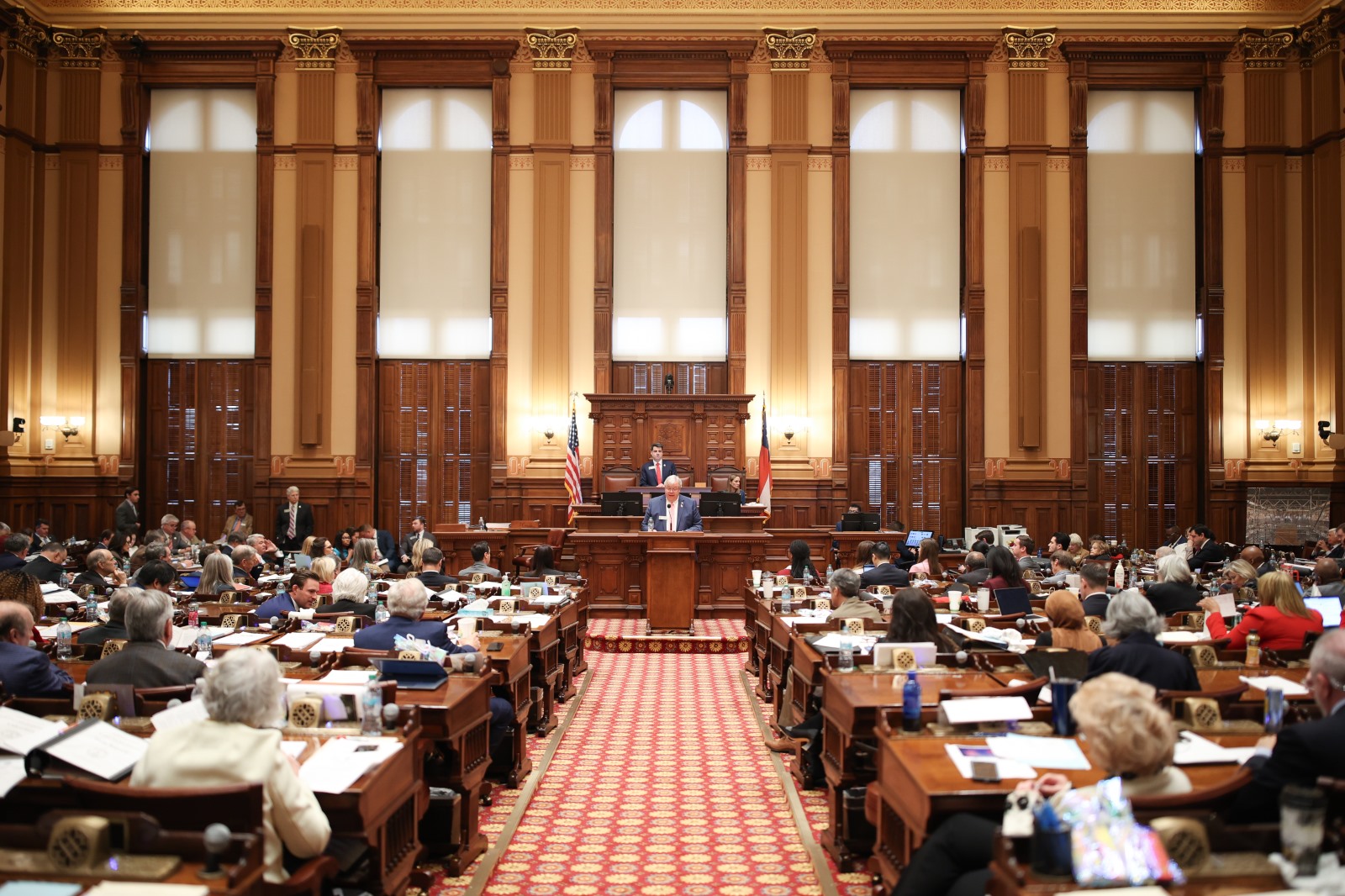
On February 5, the House adopted the first of two budgets it will pass this session. Budget bills are the only constitutionally mandated work of the General Assembly, making their timely passage critical to keeping the session on schedule. Throughout the budget, the House added funds for cybersecurity, technology, and other modernization efforts. The AFY26 budget now moves to the Senate, while the House will begin work on the FY27 budget, which sets state spending effective July 1, 2026.
Committee Vets Housekeeping Measure
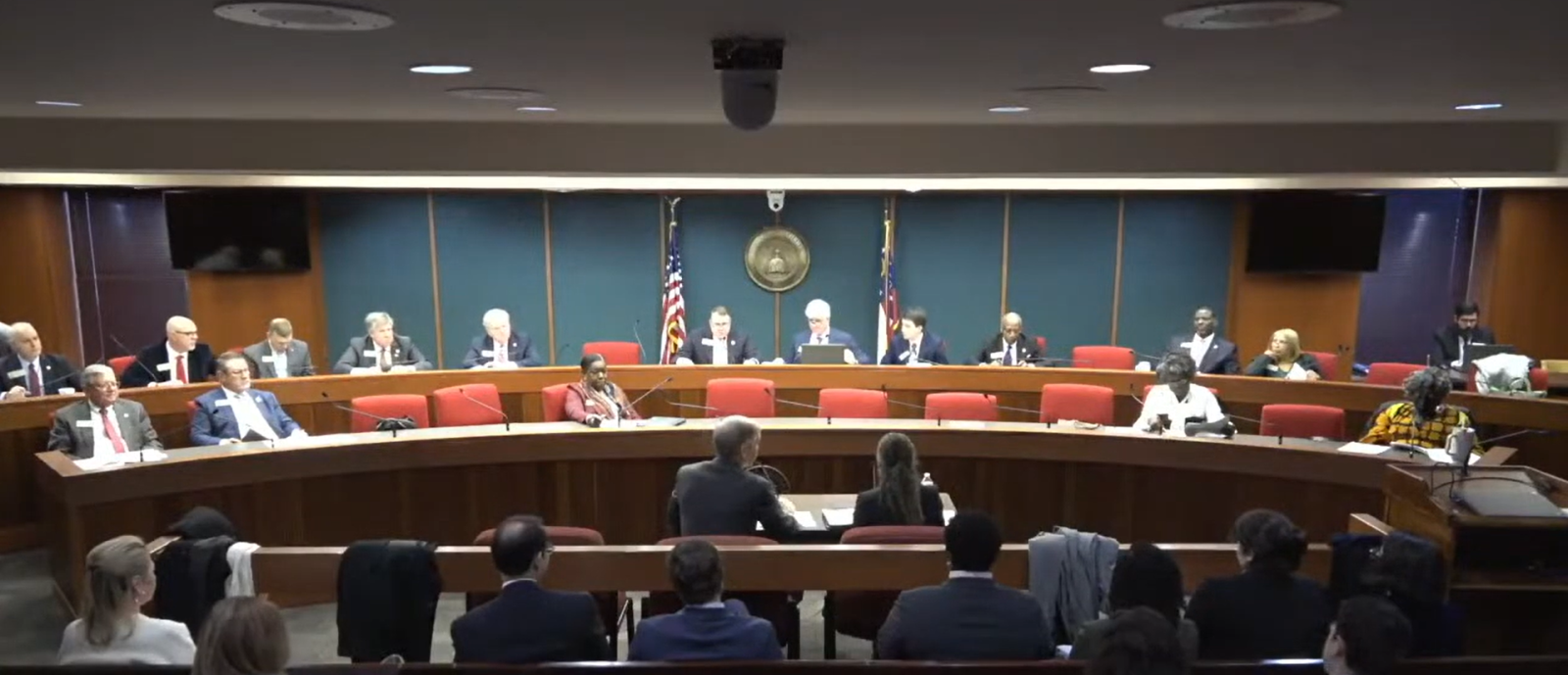
The House Banks and Banking Committee thoroughly vetted the Department’s annual housekeeping measure on February 2. Committee members drilled down on provisions related to elderly financial exploitation. They specifically asked about training and how frontline tellers would be prepared to recognize red flags. Chairman Bruce Williamson praised the role of community bankers, who are well suited to know their customers and help protect them. The Department emphasized that this is a permissive, not mandatory, tool. Many members shared personal or constituent experiences with scams and are grateful for this “first step” in protection against sophisticated financial fraud.
Active Measures: Banking

Department of Banking Housekeeping (HB 945) Rep. Bruce Williamson, R-Monroe
Approved by the House on Feb-6
This year’s legislative housekeeping package is one of the most consequential in recent memory. The bill establishes a process to allow financial institutions to place temporary holds on transactions when they reasonably suspect financial exploitation of elderly (65+) or disabled adults. The initial hold may last up to fifteen business days, with one additional fifteen-day extension permitted. The financial institution must provide notice of the hold to both the account holder and any trusted contacts. Institutions acting in good faith receive civil, criminal, and administrative immunity.
The legislation also regulates cryptocurrency ATMs, with mandatory consumer disclosures, fee caps, and daily transaction limits. It expands the Department’s authority over litigation financiers to increase transparency and accountability; this was part of last year’s legal reform package.
The bill makes other technical changes, including:
-
Updating merger notification and approval procedures
-
Clarifying MALPB rules
-
Clarifying certain credit reporting requirements
-
Updating mortgage, installment lending, and fair lending provisions
-
Clarifying Department authority across charters and licensing regimes
-
Authorizing the Department to object to the merger or consolidation of a bank or trust
For more information, click here for a summary provided by the Department.
Securities and Commodities Regulation (HB 934) Rep. Noel Williams, R-Cordele
Favorably reported from the House Banks and Banking Cmte on Feb-5
HB 934 transfers the regulation of securities and commodities from the Secretary of State to the Department of Banking and Finance. Doing so consolidates financial regulation within the Department, a move that is intended to improve oversight and coordination. This change comes on the heels of the First Liberty Building & Loan scandal, in which the Secretary of State’s Securities Division failed to uncover misuse before federal authorities intervened.
Voluntary Portable Benefit Plan Act (HB 987) Rep. Todd Jones, R-Cumming
Favorably reported from the House Industry and Labor Cmte on Jan-28
HB 987 creates a legal framework for voluntary portable benefit plans for independent contractors. It is designed to allow those workers to accumulate and manage benefits (like insurance and retirement savings) without changing their legal classification as independent contractors. It specifically authorizes banks to serve as portable benefit account providers, creating opportunities for new deposit products.
Higher Education Savings Plan (HB 962) Rep. Chuck Martin, R-Alpharetta
Considered by a House Ways and Means Subcmte on Feb-4
Current law provides a fixed cap on the maximum contribution limit for the Georgia Higher Education Savings Plan. HB 962 instead allows the Savings Plan’s Board of Directors to set the maximum contribution limit. It also modifies an exemption from taxable net income for contributions to certain education savings plans.
Transactional Gold and Silver Act (SB 424) Sen. Marty Harbin, R-Tyrone
Pending in the Senate Banking and Financial Institutions Cmte
SB 424 provides for gold and silver specie as legal tender. It creates an electronic payment system and a bullion depository. It prohibits a social credit scoring system.
Financial Literacy (HB 1114) Rep. Bill Yearta, R-Sylvester
Assigned to the House Education Cmte on Feb-2
HB 1114 allows students in ninth and tenth grade to complete the high school graduation financial literacy course requirement.
Local Government Investment Pool (SB 441) Sen. Marty Harbin, R-Tyrone
Assigned to the Senate Banking and Financial Institutions Cmte on Feb-2
SB 441 requires certain pooled investments to be approved by the State Depository Board.
Active Measures: Property

Notice of Foreclosure (HB 948) Rep. Beth Camp, R—Concord
Favorably reported from the House Judiciary Cmte on Feb-5
HB 948 relates to mortgages, conveyances to secure debt and liens and tax sales. It provides for debtors in foreclosures to receive notice at the time of foreclosure that they may file a claim for any surplus funds after the foreclosure sale if any funds remain after satisfying all liens. The notice also lets the debtors know that surplus funds may be considered abandoned funds and escheated to the state if not claimed within five years.
Debtor's Aggregate Interest (HB 1024) Rep. Soo Hong, R-Lawrenceville
Pending in the House Judiciary Cmte
HB 1024 increases the exemption for a debtor's aggregate interest in real property or personal property that the debtor or a dependent of the debtor uses as a residence, in a cooperative that owns property that the debtor or a dependent of the debtor uses as a residence, or in a burial plot. The exemption increases from $21,500 to $50,000 or from $43,000 to $100,000 if it is the primary residence of both spouses.
Real Estate Security and Title Act (HB 1042) Rep. Matt Reeves, R-Duluth
Considered by the House Judiciary Cmte on Feb-5
HB 1042 authorizes the holder of a security instrument to submit a credit bid at a judicial sale instead of tendering cash or a certified check. It strengthens privacy protections for current and former judges and their spouses and increases eligibility standards for special masters in certain quiet title proceedings. Committee members voiced concern with eliminating the option to tender cash, money order, or certified check and the bill was held for additional work.
Repossession of Motor Vehicles (HB 1134) Rep. Kimberly New, R-Villa Rica
Assigned to the House Regulated Industries Cmte on Feb-3
HB 1134 revises notice requirements for repossessors of motor vehicles. It provides requirements for determining the completion of a repossession of a motor vehicle.
These other property measures are also pending:
- Create Community Development Districts (HB 317 / HR 192)
- Allow binding referendum to dissolve property owners' associations (HB 1036 and HR 1046)
- Create a regulatory framework for property owners' associations (SB 406)
- Prohibit property owners' associations from traffic and parking enforcement (SB 393)
Active Measures: Taxation
Eliminate Ad Valorem Tax on Timber (HR 1000) Rep. Chuck Efstration, R—Mulberry
Pending in the House Ways and Means Cmte
HR 1000 proposes an amendment to the Constitution to eliminate the ad valorem tax assessment of certain timber at sale or harvest. To make affected cities, counties, and school districts whole, the state will annually appropriate funding according to a formula.
Active Measures: Courts and Legal Reform

Magistrate Court Fees and Costs (HB 999) Rep. Rob Leverett, R-Elberton
Adopted by the House on Feb-3
This legislation clarifies fees and costs associated with Magistrate Court proceedings. It also corrects a drafting error from a previous bill related to the nonpartisan election of magistrates.
Increase Magistrate Court Jurisdiction (SB 405) Sen. Ed Setzler, R-Acworth
Favorably reported from the Senate Judiciary Cmte on Feb-5
SB 405 increases the max value of civil claims that can be tried in magistrate court from $15,000 to $50,000.
Business Litigation Reform (HB 1185) Rep. Chuck Efstration, R-Mulberry
Assigned to the House Judiciary Cmte on Feb-5
This is business-friendly litigation reform is designed to make Georgia more attractive for incorporation and headquarters operations.
Active Measures: General Business
Disposition of Unclaimed Property (SB 403) Sen. Kay Kirkpatrick, R—Marietta
Adopted by the Senate on Feb-5
SB 403 updates Georgia’s Unclaimed Property Act, including provisions addressing the treatment of virtual currency. The bill makes other administrative changes, including clarifying when property is presumed abandoned, expanding holder notice requirements, adjusting publication standards, and modernizing claims processing and payment methods.
Tax Credit for Individuals (HB 1000) Rep. Matthew Gambill, R-Cartersville
Pending in the House Ways and Means Cmte
HB 1000 provides a one-time tax credit for individual taxpayers who filed income tax returns for the 2024 and 2025 taxable years. This is a key component of Governor Kemp’s final legislative package.
-
Single taxpayers are entitled to a $250 tax credit,
-
Heads of household are entitled to a $375 tax credit, and
-
Married couples filing a joint return are entitled to a $500 tax credit.
Reduce the Income Tax Rate (HB 1001) Rep. Will Wade, R-Dawsonville
Pending in the House Ways and Means Cmte
HB 1001 accelerates a reduction in the state income tax rate to 4.99% effective for tax year beginning January 1, 2026. This is one of Governor Kemp’s legislative priorities.
Municipal Election Schedule (SB 422) Sen. Tim Bearden, R-Carrollton
Pending in the Senate Ethics Cmte
SB 422 requires most municipal elections to occur in even-numbered years. It provides a one-year extension to the terms of office of most municipal officers for the transition of municipalities into even-numbered year election cycles.
ICBA Capital Summit
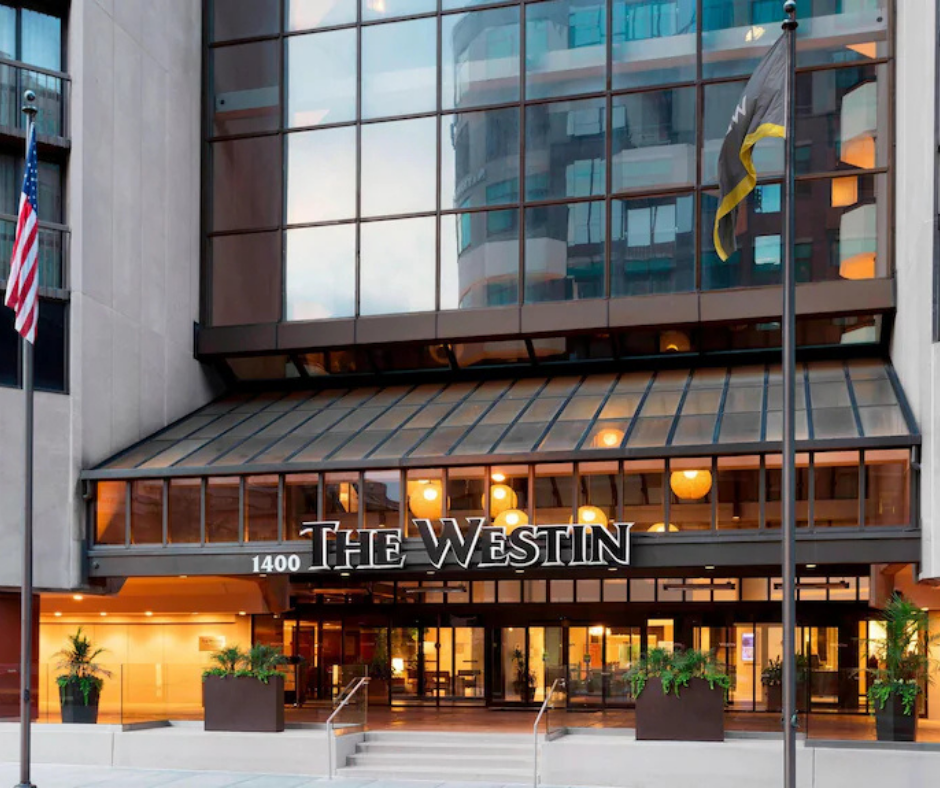
ICBA’s 2026 Capital Summit will be held May 4-7, 2026, at the Westin Washington, DC, Downtown. For more information on the Summit or to register for the event, click here.
Categories
CBA Signature Events
Upcoming Webinars

ICBA Education Programs